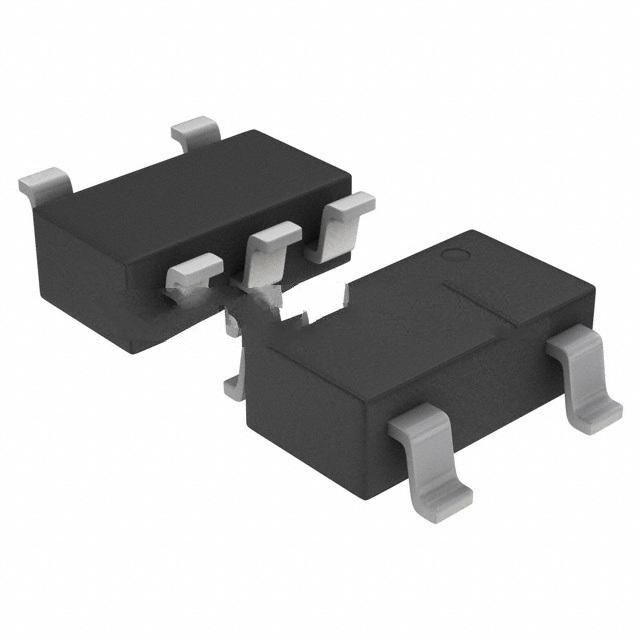
BC547 transistor detailed explanation: features, pinout, specifications, working principle

Introduction to BC547 transistor

BC547 transistor is a widely used NPN type bipolar junction transistor (BJT) suitable for low power amplification and switching circuits. Due to its small size, low price and stable performance, it is widely used in electronic projects and circuit design.
BC547 transistor type
BC547 transistor is an NPN type bipolar junction transistor (BJT, Bipolar Junction Transistor), widely used in low-power amplification and switching applications. It belongs to the BC547 series, which is classified by DC current gain (h_FE):|
Model |
DC current gain (h_FE) |
|
BC547A |
110 - 220 |
|
BC547B |
200 - 450 |
|
BC547C |
420 - 800 |
How to choose?
- BC547A: Suitable for low-gain amplification or switching circuits.
- BC547B: Suitable for most amplification applications.
- BC547C: Suitable for high-gain amplification circuits, such as audio signal amplification.
Features of BC547
Type: NPN bipolar junction transistor (BJT)Low power: suitable for small signal amplification and switching applications
High gain: its DC current gain (hFE) range is wide, usually between 110 and 800
Low noise: suitable for audio and signal amplification circuits
Low current consumption: suitable for energy-saving circuits
Package: TO-92 is a common package, suitable for PCB circuit boards
BC547 transistor Pinout
BC547 usually adopts TO-92 package, with three pins:

Collector (C): connected to the load or power supply, responsible for collecting the main current.
Base (B): used to control the conduction and cutoff of the transistor.
Emitter (E): grounded or used as the output current path.
|
Pin |
Function |
|
Collector |
Connect to the high potential end, current flows in |
|
Base |
Control switch or amplify |
|
Emitter |
Connect to the low potential end, current flows out |
Specifications of BC547
Here are the main specifications of BC547:
|
Parameter |
Description |
|
Type |
NPN Bipolar Junction Transistor (BJT) |
|
Pac kage |
TO-92 (common small signal transistor package) |
|
Operating Mode |
Amplifier Mode, Switching Mode |
|
Maximum Current (I_C) |
100mA |
|
Maximum Collector-Emitter Voltage (V_CE) |
45V |
|
Maximum Power Dissipation (P_TOT) |
500mW |
|
Gain (h_FE) |
110 - 800 (depending on the model, such as BC547A, BC547B, BC547C) |
|
Operating Frequency (f_T) |
300MHz (maximum) |
Working principle of BC547
BC547 is an NPN transistor, usually used for amplification and switching applications. Its working principle is based on the basic operation of the BJT transistor, which is to regulate the collector current (Ic) by controlling the base current (Ib).(1) Active Mode
When the base-emitter voltage (Vbe) exceeds 0.7V (the conduction voltage of silicon transistors), the transistor enters the active state:- Base current Ib increases → collector current Ic increases
- Current gain hFE = Ic / Ib
- Applicable to signal amplification, audio amplification and other applications
(2) Cutoff Mode
When the base-emitter voltage (Vbe) is lower than 0.7V, the transistor is in the cutoff state:- Ib = 0, Ic = 0
- The transistor is equivalent to a circuit breaker
- Applicable to digital switching circuits
(3) Saturation Mode
When the base current is large enough to make the collector-emitter voltage Vce drop to close to 0V, the transistor enters the saturation state:- Vce ≈ 0.2V
- The transistor is fully turned on
- Applicable to switching applications, such as driving relays, LEDs, etc.
Application of BC547 transistor
Due to the characteristics of high gain, low power consumption and low noise, BC547 is widely used in the following fields:Electronic switch
When BC547 is used as a switch, the base controls whether it is turned on:High base voltage (>0.7V) → transistor is turned on, and the load (such as LED, relay) is powered.
Low base voltage (<0.7V) → transistor is turned off, and the load is disconnected.
Example: LED Switch

When the Arduino outputs HIGH, BC547 turns ON, lighting up the LED.
Signal Amplification
BC547 is used for audio amplification and sensor signal boosting:
- Low-frequency audio signals (e.g., microphones, speaker pre-amplifiers).
- Sensor data amplification (e.g., temperature sensors, light sensors).

Used to amplify weak microphone signals.
Relay Driver
Since microcontrollers (e.g., Arduino, ESP32) have low output current (<20mA), BC547 can act as a driver to control high-power relays.
Example: Using BC547 to Drive a Relay

When the Arduino outputs HIGH, BC547 turns ON, activating the relay.
Difference between BC547 and BC548
|
Parameters |
BC547 |
BC548 |
|
Voltage (V_CE) |
45V |
30V |
|
Gain (h_FE) |
110 - 800 |
110 - 800 |
|
Noise |
Low noise |
Normal |
BC547 is more suitable for high voltage applications, while BC548 is suitable for general purpose.
BC547 replacement model
- BC548 (lower voltage, but similar parameters)
- 2N3904 (higher operating frequency, but lower gain)
- S8050 (domestic model, suitable for 1A current)
BC547 Datasheet

Conclusion
BC547 is a small, low power, high gain NPN transistor suitable for amplification and switching circuits. Its simple pinout makes it easy to use in circuits and its low price makes it suitable for a variety of electronic projects. Whether it is amplifying audio signals or used as a switch driver for a microcontroller, BC547 is a reliable choice.
Statement:All articles (images, texts, audio) on this site are uploaded and shared by users, or integrated from relevant internet sources, only for user's learning. If your rights are violated, please contact the administrator to delete! Link to this article: https://www.jinftry.com